Every night, a beguiling succubus would appear in my dreams. Her name is Euterpe, the muse of music and lyric poetry – the Giver of Pleasure. (My kind of woman.) She would seduce me throughout the nights, draining my life force. But was it worth it? Oh, yeah. Now, during the misty, musical days, I was composing the best music of my life; all the while daydreaming of rolling in the arms of Euterpe.
I had set about to create an album of original songs about my adventures in Panama:
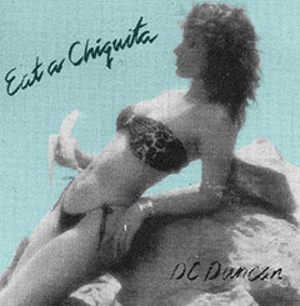
Eat A Chiquita
In 1970, I did a tour of duty with the U.S. Army in Panama. The country, and its vibrant people, had captured my heart. So now, in 1983, after writing 10 songs about my Panamanian experience, it was time to ‘lay it down.’
Jayebird had inherited some money from her late father and kindly offered to finance the ambitious project. She was the executive producer of the album and ruled with an iron fist.
Wonderlove: Kelly McNulty, Lead Vocals
My ‘Madhatter’ friend Lewis Winn and I went to work arranging the tunes. Every song needed a beginning, a middle and an end, most of them with a Latin flare. We wrote chord charts, found the appropriate keys and tempos, developed catchy hooks, and decided on instrumentation for each piece. I had written some pretty good lyrics, and then we fine-tuned the hell out of them.
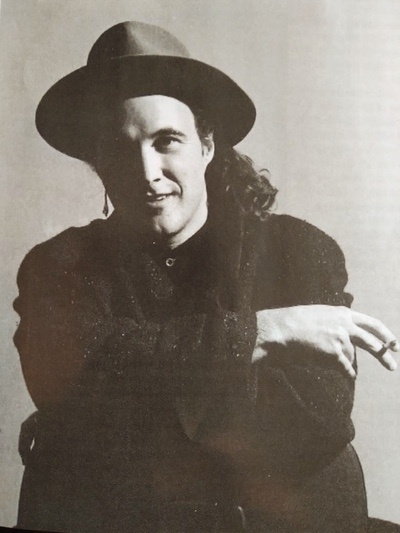
The late, great Kelly McNulty – 1953-2025
I had decided beforehand to do a pre-production recording of the entire album at Tony Young’s home studio. This way we could lay down all the rhythm tracks with ‘scratch’ vocals and then start stacking leads, padding, horn section and ending up with most of the final vocals. We used a 4 track, reel-to-reel Teac and used quarter inch tape that I had won by winning the songwriters contest earlier. (We were actually capable of recording 7 tracks by mixing the rhythm tracks down to one, giving us 3 more open tracks.)
Then we used my contest winning cassettes to record work tapes for all the many players. All instrument players would receive work tapes and chord charts. I wrote the horn parts that were finally scored professionally. The beauty of this system is that once we entered the 24-track studio, everyone involved with the project already knew his or her parts. This would save us a lot of time; and time in the studio is money – lots of it! (Sometimes $100 per hour or more.)
And the big studios didn’t use quarter inch tape. They used expensive 2-inch tape!
I booked ‘block time’ at Kludgit Sound Recording Studio in Cerrillos, New Mexico, 26 miles southwest of Santa Fe. The village of Cerrillos is a sleepy old relic lost in time, shaded by huge cottonwood trees with quaint adobe homes and ma-and-pa shops. Wide ancient streets crisscross, and the air is filled with the sweet scent of piñon smoke. A lovely place to record… or just plain relax.
Now we scheduled the players and singers to come in and record their parts. Of course, all of the rhythm tracks were ready, so if a player had two or more songs, he or she would put down all of their songs in one session. Then the next player would come in and do the same. For the most part it was like clockwork. (Actually, more like Clockwork Orange.
NOTE: All vocal harmonies and horn section parts were doubled on separate tracks. This technique really fattens the sound tremendously.
I set up a large drum kit with timbales that was mic’d to the hilt and perfectly tuned. (Buddy Rich once said: “You don’t tune drums… you tighten them!” Hmmm.) My friend and fellow drummer, Baird Banner – owner and chief engineer – was a well-known technician from California. His wife Busy McCarroll sang on three of my songs. (I once played in her band, Busy & The Bodies before she married Baird.)
I had hired two very special guest celebrities:
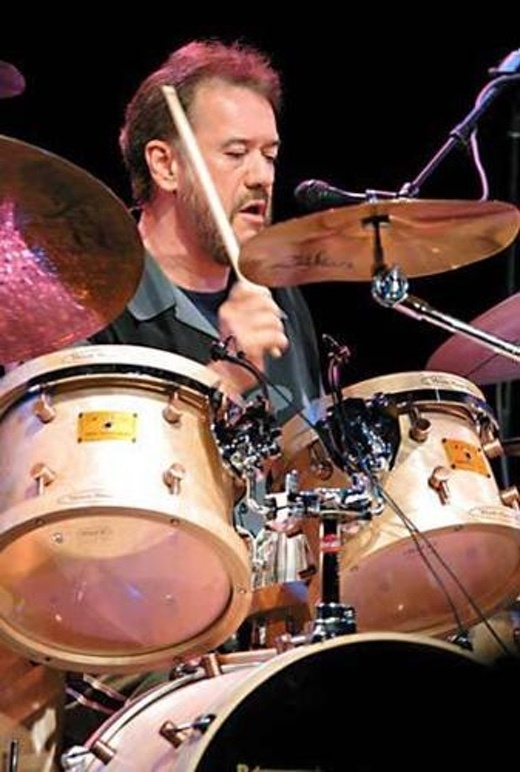
Airto Moreira.
Airto! World renowned Brazilian percussionist Airto Moreira (Chick Corea, Miles Davis, Weather Report, etc.) had been performing at Club West, where I met him after the show. His wife, Flora Purim, singer extraordinaire, was at his side. Later Baird approached them about playing on the album. I wanted both of them, but Flora wanted a little too much money for the title track. (The singer I finally hired – Paula Bragg – did a tremendous job imitating Flora Purim. Airto played on “Eat A Chiquita” and “The Bolivian Railroad.”
Eat a Chiquita (6:38) featuring Airto.
Jimmy Carl Black! The original drummer for Frank Zappa’s Mothers of Invention. Tony Young had been playing in Jimmie’s band, Captain Glasspack & His Magic Mufflers! He and I hit it off right from the git-go.
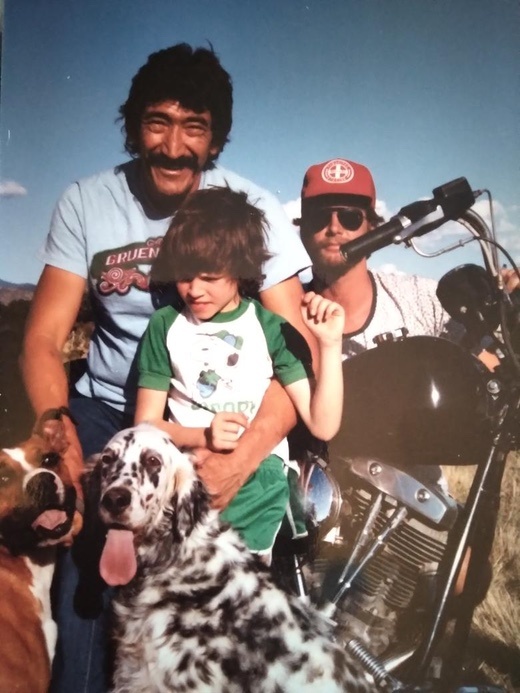
Jimmy Carl Black with Mike Waganaar and Tait Duncan
Jimmie stayed at our house for three crazy days and nights. (OMG!) He put down two songs: “The Island” and “Revolution.” Years later I called Jimmie in Austin and somebody with a thick British accent answered the phone: it was Arthur Brown (The Crazy World of Arthur Brown!) one of my favorites. It was a pleasure talking with him. (Should have hired him, too, but the album was already making the rounds.)
Other notables: Roger Burton from the Bee’s Knees and Kelly McNulty from the Buster Brown Band were flown in from Dallas for their strong vocals on several songs. They both stayed at our house (which by that time had turned into a goddam Bed & Breakfast). Then I ran into honking sax player, Smokey Joe Miller, in Santa Fe whom I had known from playing Fat Dawg’s in Lubbock. Smokey had played with Paul Ray & The Cobras in Austin, featuring a young Stevie Ray Vaughan. He and I drove out to the studio and laid down a righteous track on “Wonderlove.”) Chicago transplant, Doc Span, played harp on “Carcel Modelo,” the infamous Panamanian prison where I had spent 68 long days in squalor – without beer.
There were 25 players and singers, 6 actors and – not to mention – the persnickety production team! I treated everyone fairly and overlooked their many shortcomings; and all were extremely over-compensated. (Jeez!)
“The secret of life is honesty and fair dealing. If you can fake that, you’ve got it made.”
– Groucho Marx
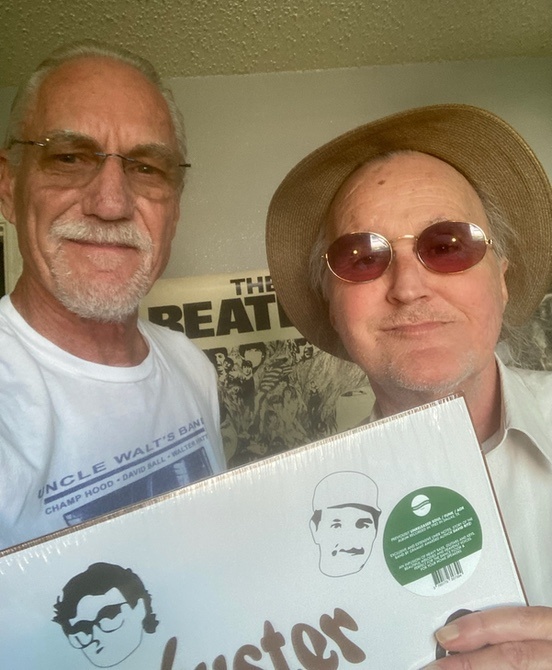
Roger Burton and Kelly McNulty, more recently.
Eat A Chiquita
SIDE ONE
1 Wonderlove
2 The Island
3 Eat A Chiquita
4 Carcel Modelo
5 Goodbye Sofia
SIDE TWO
6 Viva Panama
7 Don’t Give Up the Ship
8 The Bolivian Railroad
9 Revolution
10 Goodbye Sofia (refrain)
The Island (5:17) featuring Roger Burton, Lead Vocals
THE PLAYERS:
DC Duncan: Drums, Vocals, Keyboards; Airto: Percussion 3, 8; Dave Anderson: Alto and Soprano Sax, Flutes 2, 3, 6, 7, 8, 9; Jimmie Carl Black: Vocals 2, 9; Paula Bragg: Vocals 3; Roger Burton: Vocals 1, 2, 4, 6, 7; Margo Covington: Vocals 8; Sal D’Onofrio: Bass 3, 6; John Gagan: Bass 3, 6; David Gilliland: Guitar 4, 6; Ray Griffin: Tenor Sax 10: Busy McCarroll: Vocals 3, 4, 6; Diego McConkey: Finger Cymbals 2; Kelly McNulty: Vocals 1, 2, 4, 6, 7: Smokey Joe Miller: Tenor Sax 1: Kenny Pierson: Keyboards 6, 8, 9; Bob Rheam: Trumpets 2, 6, 8; Tom Rheam: Trumpets and Flute (trumpet solo) 2, 6, 8; Andrea Romero: Vocals 6; Sherman Rubin: Keyboards 3, 7; Doc Span: Harp 4; Michael David Waganaar: Steel Guitar 1, 2; Lewis Winn: Guitar and Fretless Bass 1, 3, 4, 5, 8, 9,10; Dr. Harri Wolfe: Accordion 6; Tony Young: Bass 2, 7
ACTORS:
John Oldach: 9; Rona Gold: 9; Tove: 9; Zoe: 9; Janet Persons: 9; Tory the Barking Dog: 5
The Bolivian Railroad (3:53)
THE DEATH SCENE:
At the end of “Revolution” – vocals by Jimmy Carl Black – is a performance sequence in which the lead character (expertly played by yours truly) is hand-cuffed and led to a clearing in the jungle. There he is summarily executed by machine gun fire. (I suspect most of the cast were secretly hoping for real machine gun fire.) His last word is: “Sofia,” his Colombian lover. The final song on the album is the reprise of “Goodbye Sofia.” The solo saxophone slowly fades into a cacophony of jungle birds and then fades out. (So sad.)
PRODUCTION TEAM:
Jaye Mitchell Duncan: Executive Producer; DC Duncan: Producer and Arranger; Tony Young: Associate Producer and Assistant Engineer; Baird Banner: Engineer and Assistant Producer; Randy Rand: 2nd Engineer; Rumaldo Ortiz: Assistant Engineer. Recorded and mixed at Kludgit Sound, Cerrillos, NM; Music scored by Tom Rheam.
It is said that magicians never, ever reveal their magic secrets; but musicians – especially those with little discretion – will reveal anything that might be the least bit of interest to their readers, such as you.
The title song, “Eat A Chiquita” was recorded in three parts. (There, I said it!) When listening to this piece, take note that the ‘head’ (the first melody section) was recorded as part one. The second part: the leads (in major and minor), and the drum interlude was then recorded. Finally, the third part: the second head and ending, was recorded. After the fact, Baird Banner expertly spliced the 2-inch tape to connect the three separate parts. Voila. Magic!
Making this album was a pure delight! Everyone involved was professional and creative to the max. And the laughter was spontaneous and often. Amazingly, the comradery persisted throughout the entire project and not one punch was thrown! Visitors, during ‘open sessions,’ were welcomed to give a listen. A few notable guests were Michael Martin Murphy’s father and Texas songwriter, Gary P. Nunn (“London Homesick Blues”).
We shopped the music to record companies near and far and finally procured what looked like a genuine record deal with Nautilus Records in Santa Barbara, CA. Our A&R man assured us a deal was in the works, until it wasn’t. (In the end I didn’t even get a handsome cutlery set for my efforts – not even a blender!)
I carried on with a positive attitude. (What choice did I have?) We had given it a good shot but, evidently, my Evil Mistress had other plans.
“Never give up on your dreams. Keep sleeping.”
– Michael Clifford